CallityLabs

Enterprise Secure AI Communication

Consolidate fragmented enterprise voice operations and proactively protect critical information with AI automation and PQC

PQC Voice Communication unifies fragmented business communication into one secure platform, automates post-call execution with AI, and prepares your voice assets for quantum-era security threats.

Reliability

99.99%

Latency

Low-jitter

Deployment

Carrier-ready

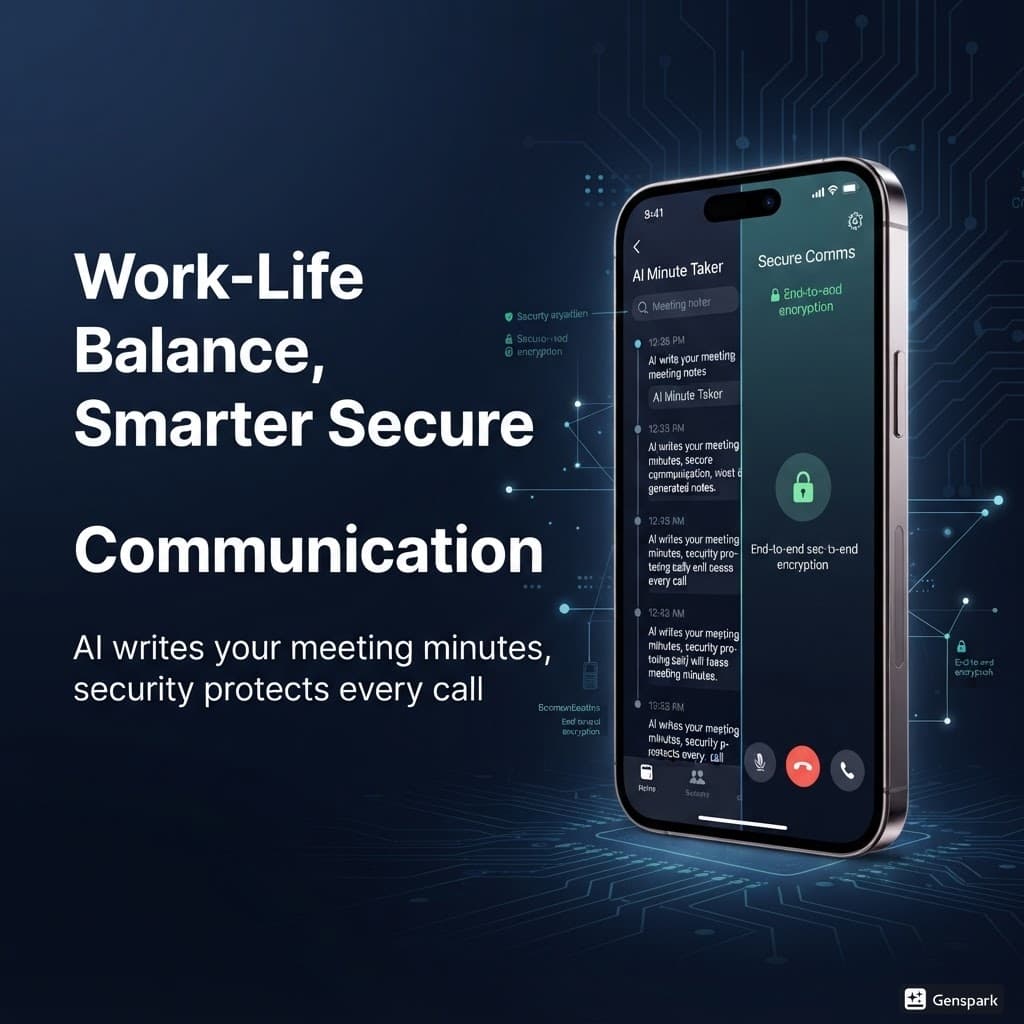
PQC Voice Communication secure call scenario

Why It Matters

Enterprise communication remains unintegrated, and manual post-call operations keep organizations vulnerable to information leakage.

Many organizations still split customer calls, internal messaging, email collaboration, and urgent instructions across separate personal and business channels.

As voice data becomes a critical business asset, this fragmented model creates operational delay, weak governance, and persistent risk of information leakage.

  • Business operations rely on personal-device channels instead of employee-only secure calling
  • Task instructions shared through personal messengers
  • Critical records scattered across call notes, email, and chat
  • Manual post-call work for summaries, CRM updates, and follow-up actions
  • Exposure to deepvoice fraud, ransomware, and quantum-era decryption risk

Core Value

Integrated value from secure voice operations to AI-driven execution

Telefony Platform combines secure voice communication, enterprise workflow integration, and AI automation in one architecture.

Core ValueDescriptionCustomer Impact
AI ProductivityAI executes post-call tasks automaticallyHigher productivity
SecurityEnterprise voice and data protectionLower leakage risk
CollaborationUnified communication workflowStronger collaboration
Business AutomationCRM/ERP integrated automationReduced operating cost
Quantum ReadyPQC-ready communication securityFuture-proof defense

Architecture

System Flow

BIDIRECTIONAL SECURE VOICEE2E SESSION CONTROL FABRICAI AND ENTERPRISE AUTOMATIONEndpoint AExecutive / field userEndpoint BAgent / office userPQC Secure GatewayAir-gapped transport + key rotationmVoIP Session CoreSIP routing + policy + QoSInternal AI-MRFRTP anchor + STT/TTS + guardrail3rd-party LLM / Private sLLMModel federation connectorWorkflow OrchestratorAction policy + task triggerLegacy Work SystemsCRM / ERP / Ticket / GroupwareTrue two-way call path: Endpoint A and Endpoint B over one secured fabricE2E voice stays protected while AI automation coordinates enterprise actionsBidirectional RTP/SRTP call legsOrchestrated integrations to model services and legacy work systems

Key Features

  • Post-Quantum Cryptography over isolated enterprise networks
  • Seamless mobile and PC call continuity
  • Real-time context, logs, and session sync
  • Internal AI-MRF voice processing without cloud egress
  • Secure minutes automation with ERP and Jira integration

Use Cases

  • Confidential executive communications in closed networks
  • Secure cross-device operations for hybrid workforce
  • Automated, compliant meeting records for regulated teams

Solution Q&A

PQC Voice Communication Q&A

Can this solution run in a fully closed network?

Yes. The architecture is designed for isolated enterprise environments and supports air-gapped deployment with internal-only data paths, so voice and metadata can remain inside your controlled boundary.

How does AI meeting automation work without cloud leakage?

Voice processing and meeting artifact generation are handled by internal AI-MRF components, so media, transcripts, and summaries can stay within enterprise boundaries without external cloud egress.

Can we integrate results with enterprise systems?

Yes. Generated notes and action items can be connected to internal workflows such as ERP, CRM, ticketing, and Jira according to your security policy.

Is this solution for external customer calls?

The primary model is internal secure communication for employees and controlled partner collaboration. External call scenarios can be separated by policy and routing rules when needed.

Can we use both private sLLM and third-party LLM models?

Yes. The workflow orchestration layer supports model federation, allowing private sLLM as default with selective third-party LLM usage under approval, masking, and audit policies.

Plan with CallityLabs

Plan deployment for PQC Voice Communication

Talk with our product specialists to review architecture fit, deployment model, and rollout plan.